

Behavioural safety is often framed as getting workers to “behave safely”. But that misses the point. True behavioural safety management starts with leadership: the decisions, systems and culture that influence how people act on site every day.
If you’re evaluating behavioural safety software, the question isn’t just “Will this help us track people behaving in an unsafe way?”. It’s more about understanding why behaviours occur and create conditions where safe behaviour is easier and more likely.
That distinction separates compliance-driven tools from platforms that genuinely support a proactive safety culture.
The problem with “blame the worker” approaches
Traditional behavioural safety programmes tend to follow a familiar pattern: define safe and unsafe behaviours, observe workers, provide feedback, reinforce the good, correct the bad.
On paper, it sounds reasonable. It’s why you’ll have training programs in place to reinforce less risky behaviours. In practice, though, this shifts responsibility for safety onto frontline workers when the real causes may lie elsewhere.
The Health and Safety Executive (HSE) is clear on this point. It warns against simplistic behavioural safety programmes that overlook root causes such as:
- Poor equipment or unsuitable PPE.
- Inadequate procedures or unclear instructions.
- Workload and time pressure.
- Staffing levels and supervision.
- Management decisions and organisational culture.
When someone takes a shortcut, you’ll be inclined to ask why they didn’t follow the rules. But you should be asking what made that behaviour seem like a reasonable thing to do at the time?
And that’s a leadership question, not a worker question.
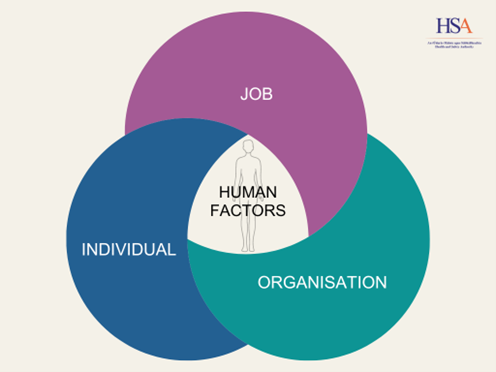
The HSE’s human factors model is useful here. It identifies three interconnected areas that influence behaviour:
| Area | Examples |
| Individual | Competence, skills, attitudes, risk perception |
| Job | Workload, task design, equipment, procedures, environment |
| Organisation | Culture, resources, communication, leadership, work patterns |
This framework makes it clear: behaviour isn’t just about personal responsibility. It’s shaped by the tools people are given, the systems they work within, and the culture set by leadership.
Effective behavioural safety management addresses all three areas, not just the individual.
What good behavioural safety management looks like
The HSE and RoSPA both advocate for approaches that go beyond observation and feedback. Their recommendations include:
- Involve employees rather than imposing programmes on them.
- Listen and use observations as dialogue, not surveillance.
- Identify root causes behind behaviours.
- Ensure visible and genuine management commitment.
- Build trust between management and employees.
- Make managers role models for the behaviours expected of others.
- Recognise positive behaviour, not just correct unsafe acts.
- Learn and adapt based on trends and feedback.
This moves the workflow from:
Observe → Blame → Close
to:
Observe → Understand → Discuss → Record → Correct → Learn → Monitor
That’s a fundamentally different approach, and it requires systems that support it.
Selecting behavioural safety software is a leadership decision
If behaviour is shaped by leadership, systems and culture, then selecting the right behavioural safety software is itself a leadership decision.
The platform you choose will influence whether:
- workers feel safe to speak up or stay silent.
- observations lead to blame or genuine learning.
- trends are visible to those who can act on them.
- positive behaviours are recognised and reinforced.
- root causes are captured or ignored.
A tool that simply logs “unsafe behaviour: worker didn’t wear PPE” isn’t behavioural safety management. It’s box-ticking dressed up as culture.
A tool that captures context – PPE unavailable, procedure unclear, time pressure, task changed – supports real understanding and meaningful action.
How m2i.SHEQ supports behavioural safety management
m2i.SHEQ is designed to support the kind of behavioural safety management advocated by HSE and RoSPA — moving beyond compliance to embed behaviour-based safety practices into everyday site activity.
Behavioural Safety is a core module available in Professional and Enterprise versions, with Enterprise offering advanced capabilities for larger or more complex organisations. Here’s what’s included:
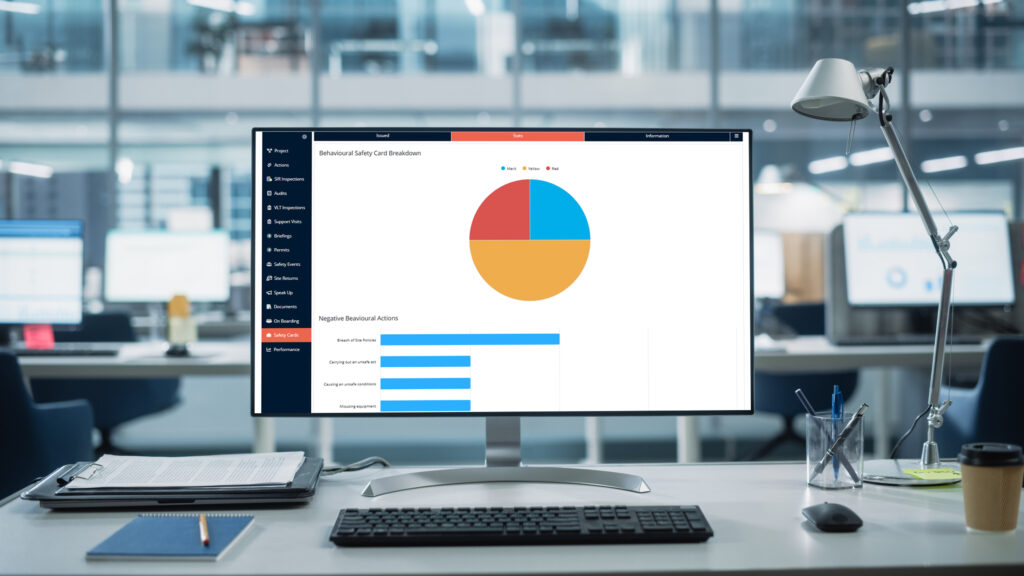
Safety cards (Blue / Yellow / Red)
Available in: Professional and Enterprise
Enable structured, immediate feedback through a simple card system:
Blue: Positive recognition for safe behaviour
Yellow: Coaching opportunity identified
Red: Immediate intervention required
This isn’t just about flagging problems. Blue Cards reinforce the behaviours you want to see, supporting a positive safety culture rather than a punitive one.
Enterprise adds: Custom card types to match your organisation’s specific behavioural categories.
Speak Ups
Available in: Professional and Enterprise
Give every worker a voice. Anonymous or named submissions encourage reporting of concerns, suggestions or safety ideas and should be accessible to all site personnel, not just safety professionals.
This supports the HSE’s emphasis on employee involvement, trust and dialogue.
Trend monitoring and behavioural insights
Available in: Professional (basic) and Enterprise (full dashboards)
Logged observations feed into dashboards that reveal leading and lagging indicators, unsafe behaviour trends, and areas for improvement. This helps leadership target proactive interventions and training before incidents occur.
Enterprise adds: Role-based dashboards and full integration with events, inspections, and KPIs for comprehensive behavioural and risk insights.
Root cause analysis
Available in: Enterprise only
Go beyond what happened to understand why it happened. Capture the conditions, decisions and organisational factors that influenced behaviour. This is exactly the approach advocated by HSE and RoSPA.
Recognition and rewards
Available in: Professional (basic tracking) and Enterprise (full reward tracking)
Reinforce positive safety behaviours by tracking engagement and issuing recognition. The system can be configured to support formal reward programmes linked to card submissions and observation activity.
Enterprise adds: Full reward tracking and reporting capabilities.
Communication tools and bulletins
Available in: Professional and Enterprise
Share behavioural safety updates, success stories and lessons learned via email-based bulletins. Target communications by project, team or business unit, closing the feedback loop and demonstrating “you said, we did”.
Integrated reporting
Available in: Professional (basic) and Enterprise (full integration)
Behavioural data contributes to wider SHEQ dashboards and KPIs, enabling you to measure culture alongside compliance and operational performance.
Enterprise adds: Full integration with events, inspections, and organisational KPIs for enterprise-wide visibility.
| Summary of Version Availability | ||
| Feature | Professional | Enterprise |
| Safety Cards (Blue/Yellow/Red) | ✓ | ✓ + custom card types |
| Speak Ups | ✓ | ✓ |
| Trend Monitoring | Basic insights | Full dashboards, role-based views |
| Root Cause Analysis | – | ✓ |
| Recognition & Rewards | Basic tracking | Full reward tracking |
| Bulletins & Communication | ✓ | ✓ |
| Integrated Reporting | Basic | Full integration with events, inspections, KPIs |
From compliance to culture is where m2i.SHEQ really delivers
Behavioural safety software should do more than record unsafe acts. It should help leadership understand behaviour in context, create conditions for safe work, and build a culture where everyone has a voice.
m2i.SHEQ supports that vision, whether you’re recognising safe actions, capturing root causes, monitoring trends, or sharing lessons learned across your organisation. Behavioural safety isn’t about blaming people for unsafe acts. It’s about leadership decisions that make safe behaviour easier, more likely and genuinely valued.
Ready to embed behavioural safety into your organisation’s culture?
Request a demo to see how the platform supports proactive, leadership-driven safety management. Read more about our core modules here.