

Every SHEQ manager understands the principle behind permits to work: before high-risk activities commence, formal checks must be completed, authorisation must be granted and controls must be verified. The permit system exists to ensure that excavations, confined space entries, hot works, and electrical isolations don’t proceed until someone qualified has confirmed it’s safe to do so.
The principle is sound. The execution, on many sites, is not.
The need to digitise permits to work
Paper-based permit systems create three persistent problems:
Visibility gaps. Head office and project managers cannot see which permits are active across multiple sites without phoning around or waiting for weekly returns.
Authorisation ambiguity. Signatures on paper forms are difficult to verify. It’s rarely clear whether the right person approved the permit, or whether they reviewed the supporting risk assessment before signing.
Expiry failures. Permits that should have been closed out or reauthorised remain “active” in a folder, while work continues beyond the original scope or timeframe.
Under HSE guidance, a permit-to-work system should provide clear, auditable evidence that hazards have been identified and controlled before work begins. When that system relies on paper stored in portacabins, the audit trail exists in theory but not in practice.
What a digital permit system should deliver
A permit-to-work module needs to do more than digitise a paper form. It must embed control into the workflow itself, ensuring permits cannot be issued without proper review, cannot continue past expiry without reauthorisation, and cannot be lost in a filing cabinet.
The m2i.SHEQ Permits extended module is designed around this principle. It manages the full permit lifecycle digitally:
| Stage | What happens | Control embedded |
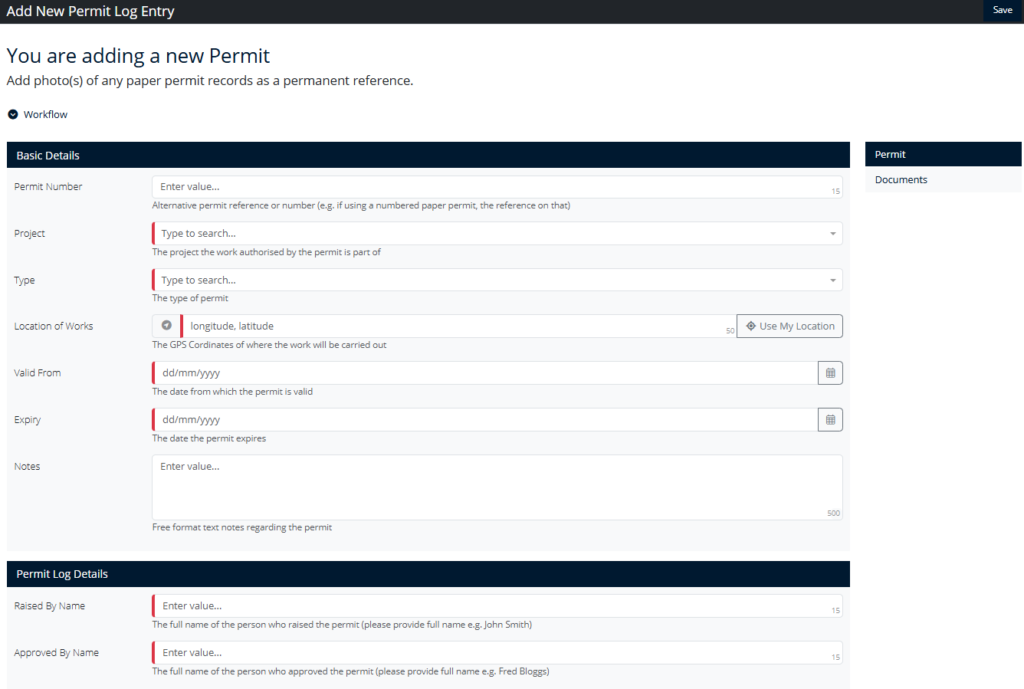
| Request | Operative or supervisor raises permit request with location, scope, and supporting documents | GPS coordinates captured; RAMS and photos attached directly to record |
| Review | Designated authoriser reviews request against risk controls | Digital workflow ensures only authorised users can approve |
| Authorisation | Permit issued with defined validity period | Time-stamped approval with full audit trail |
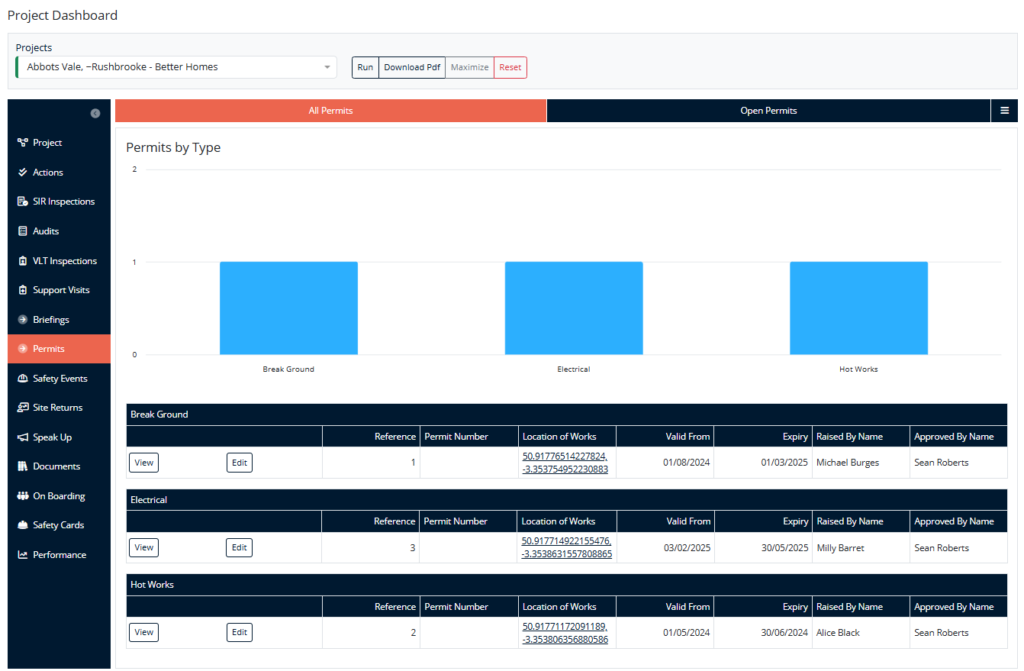
| Monitoring | Active permits visible on project and SHEQ dashboards | Real-time status across all sites from a single view |
| Extension | If work overruns, extension must be formally requested and approved | Prevents work continuing without reauthorisation |
| Close-out | Permit formally closed when work complete and area made safe | Controlled hand-back with documented sign-off |
Practical benefits for SHEQ managers
Centralised visibility. Every active permit across every site appears on a single dashboard. No phone calls, no spreadsheet reconciliation, no waiting for weekly reports. When a client asks how many confined space permits are currently live, the answer takes seconds.
Automated expiry alerts. The system notifies permit holders and supervisors as permits approach expiry. Work cannot drift beyond its authorised window without triggering a formal extension request.
Audit-ready records. Every permit carries a complete history: who requested it, who approved it, what documents were attached, when it was closed out. For CDM 2015 compliance and client audits, the evidence is already structured and accessible.
Configurable permit types. Whether your operations require permits for hot work, excavation, electrical isolation, working at height, or confined space entry, each permit type can be configured with specific fields, checklists, and approval workflows relevant to that activity.
Field-ready. Permits can be raised, reviewed and closed from the m2i mobile app (including offline, with data syncing when connectivity returns). The permit system works where the work happens.
Moving from paper to control
Paper permits give the appearance of control. Digital permits embed actual control into the process, ensuring high-risk work cannot proceed without verified authorisation, cannot continue without valid permits, and cannot escape the audit trail.
For SHEQ managers overseeing multiple sites, subcontractors and high-risk activities, that shift isn’t administrative convenience. It’s operational assurance.
Find out more about our m2i.SHEQ extended modules. Or get in touch to talk it through.