
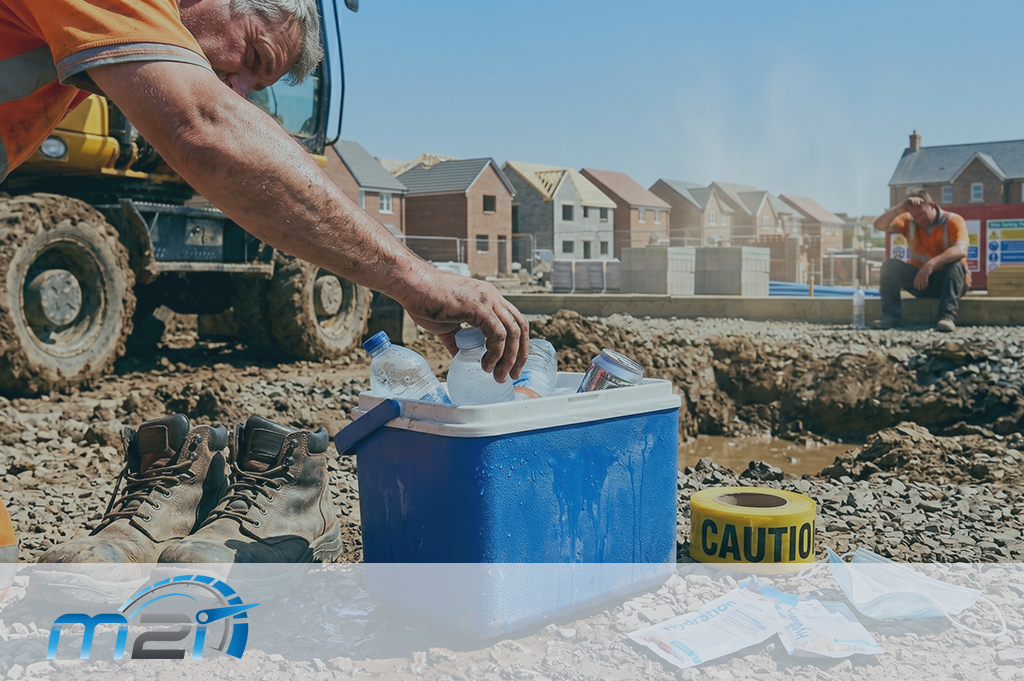
UK weather forecasts suggest a hotter-than-average summer. And with climate patterns such as El Niño continuing to influence weather extremes globally, employers may need to prepare for more than just a few uncomfortable days in the office. Is your organisation ready?
Before the temperature soars, here’s a reminder to help you prepare. For organisations with outdoor workers, manufacturing operations, logistics teams, construction sites, warehouses or facilities staff, prolonged periods of heat can introduce significant health, safety and operational risks.
The question is no longer whether extreme temperatures will occur, but whether your organisation is prepared to manage them effectively.
Why heat stress matters
Heat stress occurs when the body’s ability to regulate temperature becomes overwhelmed.
While many people associate heat-related illness with overseas climates, UK workplaces are increasingly experiencing conditions that can affect worker health, concentration and decision-making.
Heat-related issues can contribute to:
- Fatigue.
- Reduced concentration.
- Dehydration.
- Dizziness.
- Heat exhaustion.
- Heat stroke.
For the organisation itself, this can mean:
- Increased likelihood of mistakes.
- Increased risk of workplace incidents.
Even moderate temperature increases can affect performance — particularly when combined with physically demanding work, PPE requirements or direct sunlight.
Warning signs supervisors should watch for
Early intervention when it comes to heat stress or similar issues is critical. Common indicators include:
- Excessive sweating.
- Headaches.
- Muscle cramps.
- Dizziness.
- Confusion or poor decision-making.
- Unusual irritability.
- Reduced productivity.
- Nausea.
Managers and supervisors should be trained to recognise these symptoms and understand escalation procedures before conditions become critical.
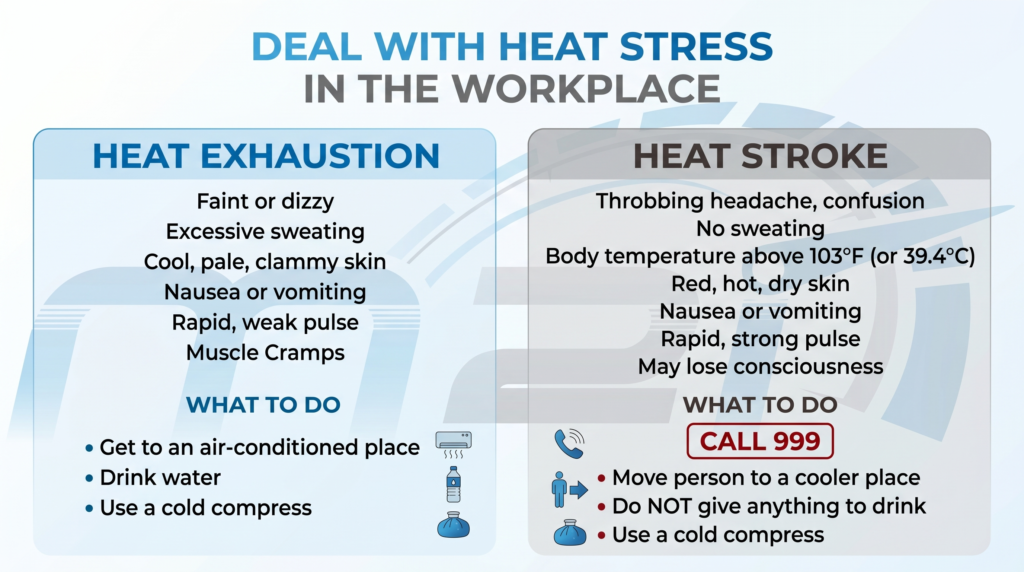
If ignored, heat stress can escalate into heat exhaustion or heat stroke. The chart below is a helpful guide for when to identify heat exhaustion and heat stroke and how to deal with it. It is vital you take proper medical advice.
Which workers are most at risk?
Certain roles face greater exposure to heat-related hazards:
Construction and Civil Engineering: Workers may spend extended periods in direct sunlight while wearing protective equipment.
Facilities and Maintenance Teams: Tasks often involve physically demanding activities in confined or poorly ventilated spaces.
Manufacturing and Industrial Operations: Heat-generating equipment can create challenging indoor working environments.
Transport and Logistics: Drivers and loading teams can experience prolonged heat exposure, particularly during loading and unloading operations.
Lone Workers: Employees working remotely may not have immediate access to support if symptoms develop.
Practical controls employers should consider
Managing heat-related risk doesn’t always require major investment.
A checklist of effective controls can include:
Review risk assessments: Seasonal hazards should be incorporated into existing risk assessments rather than treated as exceptional events.
Adjust working patterns where practical: Start earlier | Schedule demanding tasks for cooler periods | Increase rest breaks.
Improve hydration: Provide easy access to drinking water and encourage regular hydration.
Monitor weather conditions: Use forecast information to trigger additional controls when temperature thresholds are reached.
Increase supervision: Managers should actively monitor vulnerable workers and higher-risk activities.
Review PPE requirements: Ensure PPE remains appropriate and does not introduce additional unnecessary heat burdens.
Why data matters
One of the biggest challenges organisations face is identifying patterns before incidents occur.
Near misses, observations, wellbeing reports and safety inspections can provide early warning signs that heat is beginning to impact operations.
By capturing and analysing this information consistently, organisations can move from reacting to heat-related incidents to preventing them.
How digital SHEQ systems support heat-risk management
This is where having the right systems in place makes a real difference.
Platforms like m2i.SHEQ help organisations:
Record observations in real time: Frontline workers can log concerns, near misses, and symptoms as they happen, using mobile devices even in remote locations without internet access.
Track trends across sites: Dashboards and reporting tools make it easy to spot emerging patterns — such as clusters of fatigue reports or increased near misses during hot spells — before they escalate into serious incidents.
Escalate actions quickly: Workflow automation ensures that observations trigger the right responses, with actions assigned, tracked, and completed within required timeframes.
Monitor leading indicators: Rather than waiting for accidents to happen, organisations can track early warning signs like observation card submissions, inspection findings and wellbeing reports.
Provide management with clear visibility of emerging risks: Configurable dashboards give leadership instant access to safety performance data, supporting faster and more informed decision-making.
The goal isn’t just compliance — it’s building the kind of proactive safety culture where risks are identified early and action is taken before harm occurs.
Climate resilience is becoming a safety issue
Extreme weather events are increasingly discussed as environmental concerns — but they are also workplace safety concerns.
Organisations that build heat-risk management into their wider SHEQ strategy will be better positioned to:
- Protect their people.
- Maintain productivity.
- Demonstrate proactive leadership.
As warmer summers become more common, heat preparedness may soon become as routine as winter weather planning.
Questions worth asking
As temperatures rise, it’s worth reflecting on your current approach:
- How is your organisation managing heat-related risks this summer?
- Could your current reporting, inspections, and risk management processes identify emerging issues before they become incidents?
- Are frontline workers able to report concerns easily — wherever they’re working?
- Can you see trends across sites and teams in real time?
If the answer to any of these is “not as well as we’d like”, it may be time to review your systems.
Learn more about m2i.SHEQ
m2i.SHEQ helps organisations capture real-time safety information, monitor trends, and manage workplace risks more effectively — from frontline observations to boardroom dashboards.
If you’d like to explore how the platform could support your heat-risk management (or wider SHEQ) strategy, get in touch for a conversation.
Stay safe this summer.